Emily Day

Today is the 10th Annual Emily Day.

Ten years ago today, I held my 2-year-old daughter as she had a seizure. I had no way of knowing it would be the last time I would see her smack her lips as if she were tasting something awful, hold her as her body grew tight and whisper calmly to her as her eyes watered and her heart raced. When it was over, she fell asleep on my shoulder.

Two days later, she would undergo a second round of surgery to remove what was left of a benign tumor in her brain. The neurosurgeon would also remove a significant amount of scar tissue, essentially leaving her with only 9% of her left temporal lobe.

In Boston for an appointment with a neuro-oncologist, January 2005.
In Boston for an appointment with a neuro-oncologist, January 2005.

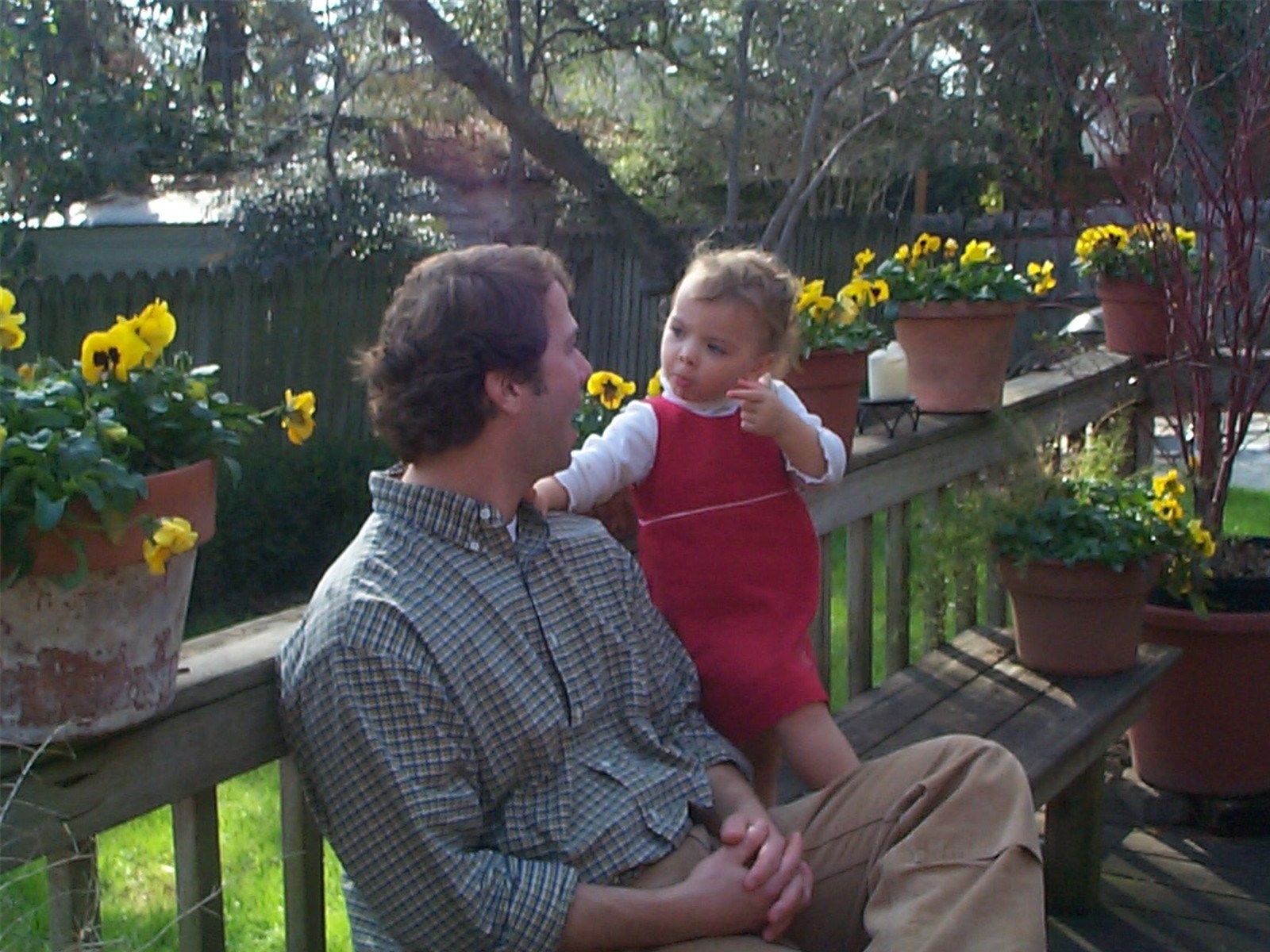
Chatting up Daddy on her birthday in 2005.

Chatting up Daddy on her birthday in 2005.

It had been a long year and a half since she had her first seizure, prompting an emergency MRI at Children’s Hospital in Birmingham. The test revealed a walnut-sized tumor. She was immediately put on anti-seizure medication, which made her tired and irritable. Her neuro-oncologist assured us the tumor “wasn’t angry” and that we could wait to see how she reacted to the meds.

Turns out, her seizures could not be controlled medically. When her seizures broke through the meds, she had up to 10 a day. The right side of her face drooped. She began losing vocabulary. Her speech was slurred. She was sleepy all the time.

After months of monitoring and weeks of tests, her team advised surgery to remove the tumor. She had her first craniotomy in March 2005. By May, her seizures returned. We started the testing process all over again.
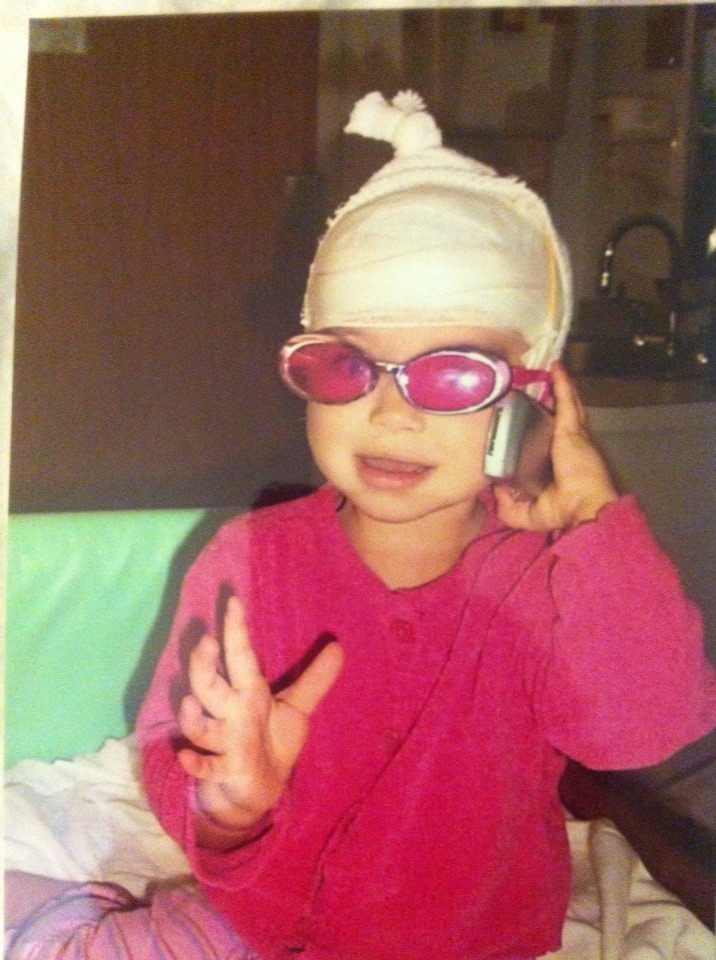
Day four of a week-long hospital stay for a video EEG. She's pretending to talk to her neurosurgeon on the phone.

Day four of a week-long hospital stay for a video EEG. She’s pretending to talk to her neurosurgeon on the phone.

This time, there was no conclusive evidence more surgery would result in no seizures. Charles and I were left with this decision: accept our child would have a lifetime of meds and seizures or put her through a painful surgery and hope one day she could be med-free and seizure-free. We struggled mightily with that decision.

One sunny, breezy day in October, I took her to the playground in her stroller. I put her in the toddler swing and gave her a push. I was wiped out emotionally. I sat quietly on the bench next to the swing set, listening to the creak of the swing and the wind blowing through the trees. I looked up at the bright blue sky and watched the clouds move across it.

Suddenly, these words came to me: “Be still, and know that I am God.” I took a deep breath, and I looked over at Emily. Within seconds, she began to have a seizure. I scooped her out of the swing and held her close. I knew exactly what had to be done.

The second round of surgery was not easy. There were complications. Her sutures wouldn’t close properly. As a result, spinal fluid leaked from them and dripped down her chubby face. We spent three weeks in the hospital. She had two more surgeries. The last time I handed my screaming toddler over to the surgical team, I broke down in sobs. I screamed at her neurosurgeon, “You fix it this time, because I can’t do this anymore!”

The third time was the charm. We took her home the Wednesday before Thanksgiving. I’ve never been so grateful.

Home after surgery, slighly swollen and bruised, but happy.

Home after surgery, slighly swollen and bruised, but happy.

Today, she’s seizure-free. She is sassy, funny, talented and smart. She takes meds for anxiety and ADHD, but they don’t have near the negative effects anti-seizure meds would have. She has a learning disorder in reading comprehension, which means she has to work extra hard in school and will soon have a tutor. She has very little impulse control, which means she speaks and acts before she thinks. These things make middle school difficult, because being different in middle school is the last thing you want to be.

In our day-to-day life, I forget how lucky she is to only have ADHD and a reading disorder. I forget there was a chance she’d never talk – that her vision would be damaged – that she’d never be able to drive a car for fear of having a seizure behind the wheel.

And this morning … I actually forgot Emily Day. She had to remind me. So, I’m writing this blog post as proof that I remember.

I remember it all, baby girl.

I remember your pediatrician looking at me, saying “Oh, Jennifer. That’s a seizure.”

I remember the radiologist who wouldn’t meet our eyes as he informed us the neurologist was waiting for us in the clinic down the hall.

I remember how you slept in between me and your daddy every night for almost two years so we would know if you had a seizure.

I remember how your teacher at day care carried you on her hip all day because you were too sick and tired to play with your friends.

I remember your four-year-old brother being shuttled back and forth between friends’ houses while we took you to Birmingham for appointments.

I remember keeping you up all night so you would sleep during your MRIs.

I remember quitting my job when your seizures returned.

I remember you waking up from a nap after that second surgery, your pillow soaking wet from spinal fluid.

I remember holding you down on the exam table while you screamed as the surgical residents replaced your stitches in an effort to stop them from leaking.

I remember sleeping in the hospital bed with you every night for three weeks.

I remember you walking around our house when you finally came home, saying “I so happy be my house.”

I remember the day you took your last dose of medication and how relieved your daddy and I were when your seizures never came back.

Happy Emily Day, our brave, strong girl. We love you. Here’s to 10 more healthy years.

Halloween 2015. Our Super Supergirl.

Halloween 2015. Our Super Supergirl.

What A Long, Strange Trip: Advice for the Newly Divorced

My daughter was diagnosed with a brain tumor when she was 18 months old. Almost immediately, two people from my professional world reached out to me to share their own stories.

Both Susan and David were parents of teenagers who’d survived brain tumors as toddlers. I leaned hard on them for advice and comfort, referring to them as my “Brain Trust.” They taught me to find the strength within me to make it through appointment after appointment, test after test, seizure after seizure and surgery after surgery. Most importantly, they taught me the power of the phrase “me, too.”

During Emily’s first round of surgery, David sat with us in the waiting room. He looked me in the eyes and said, “You’re a member of the club, now. It’s not one you’d ever thought you’d join, but here you are. You know what it’s like to have child with a brain tumor. And one day, you’ll do for me what I’m doing for you. We pay it forward. It’s what we do.”

I never found the opportunity to do for another parent of a child with a brain tumor what David and Susan did for me. But as it turns out, I’m now a member of a different club: the newly divorced. Again, not a club I ever thought I’d join, but here I am. Turns out, we pay it forward, too.

One of my good friends is in the process of divorce. She’s still a few weeks away from filing, however, she and her husband have made the decision to end their marriage. She’s on the same roller coaster I rode in 2014.

I’m trying to be of service to her. I listen carefully. I answer her questions. I coach her through the lows and laugh with her during the highs. Like my “brain trust” did for me, I’m trying to show her that she’s stronger than she thinks she is – and that quite often the most powerful words are “me, too.”

For what it’s worth, here are the bits of advice I’ve been giving my friend. None of it is groundbreaking, but sometimes it helps to hear what worked for others.

Get to therapy. I don’t believe anyone can go through such a dramatic life change without professional help. I was lucky enough to find a counselor with whom I clicked early in the process. She calls me on my bullshit when it surfaces, helps me build strategies to change and grow, and cheers me on when I’m successful. It’s a powerful relationship, and I’m grateful she’s been by my side.

Sing. I’m going to have to insist you try this, even if you think it’s silly. It doesn’t matter if you’re a good singer. Just find an anthem and sing it. Loudly. Over and over and over. In the last few months of my marriage and early days of my separation, mine was “Landslide.” It’s this line that got me:

Well, I’ve been afraid of changing ‘cause I built my world around you. But time makes you bolder, even children get older, and I’m getting older, too.

I sang it in the shower. In my car. In my office. At a friend’s karaoke Christmas party. I wasn’t picky.

Anyway, just sing. Find a song that makes you cry when you’re bottled up (“Wasted Time,” by The Eagles). Find a song that makes you stop crying when the dam breaks (“Survivor,” by Destiny’s Child). Find songs that paint the picture of the life that you want (“The Way I Am,” by Ingrid Michelson).

And then call me. We’ll do karaoke.

Read. I’m not saying everyone needs to stock up on “self-help” books, but it sure was helpful in my case. I craved books about empowerment, recovering from heart break, coping with change and forgiving yourself for your mistakes. I’ve come to refer to my favorite three writers as “The Holy Triumvirate:” Brene Brown, Elizabeth Gilbert and Glennon Doyle Melton.

Brene wrote “Gifts of Imperfection,” “Daring Greatly” and “Rising Strong.” Elizabeth Gilbert wrote “Eat, Pray, Love,” of course. She’s also very active on Facebook, did a great podcast called “Magic Lessons,” and just released “Big Magic,” which I’m reading now. Glennon’s book is called “Carry On, Warrior.” Her blog is Momastery.com.

These three women helped me get through the last year and learn how to start being the best me. And I have to say, I’m a much more interesting person these days. Well, in my opinion, anyway. And really, I’m the only one whose opinion matters. Which leads me to my next point:

Quit giving a shit about what other people think. This is a hard one. Especially if you’ve lived your life trying to measure up to other people’s expectations.

At the core of this is learning to love yourself for the messy, broken person that you are. It means changing the tapes that play in your head from negative, self-loathing phrases like “You’re fat” and “You’re a bitch” and “You’re a screw up” to kinder, gentler phrases like “You may not perfect, but you are enough” and “Hey sister, you got this” and “Whatever, you’re still fabulous.”

Once you make peace with yourself – and learn to trust yourself again – it’s much easier to quit worrying about what other people think of you. I would love to tell you I’ve mastered this. I haven’t, yet, and I’m not sure I ever will. However, I am much more comfortable speaking my mind and being myself these days. It’s nice. Most days, I really like me. Which is good, because my next piece of advice is to …

Be by yourself. I had the same conversation with different friends recently about the tendency to jump from relationship to relationship. One woman said, “It’s like I’m a monkey, swinging from vine to vine.” The other said, “Honestly, I can’t remember a time since 7th grade when I haven’t had a boyfriend or a husband.”

I thought smugly,” I am so glad that’s not me!” Then someone kindly pointed out that I’ve been divorced for a year and in a relationship for six months.

You may be tempted to file this one in the category of “do as I say, not as I do,” but I am going to go out on a limb and argue being alone and being in a relationship are not mutually exclusive.

Standing on your own two feet is important. Choosing to be by yourself for extended periods of time is important. Making decisions based on what’s best for you and for your children (NOT for your relationship) is important. Remaining true to yourself is important.

Here is a revolutionary thought: you can – and should – do all of these things while in a relationship. The danger comes when you swing from one co-dependent relationship to another, making the same mistakes you’ve made over and over without slowing down to learn from them.

I caution anyone who’s divorcing or recently divorced to give themselves as much time as possible to heal before jumping into another relationship. If you do jump, I encourage you to continue to do the hard work of healing WHILE you enjoy that new relationship. Just don’t become so entangled again that you forget who you are, where you’ve been and where you want to go.

Forgive yourself. You’re human. You’re going to screw up. And if you’re getting divorced, it probably means you’ve made a mistake or two.

Occasionally, I have a despondent moment where I say to myself, “Holy shit. I failed at marriage. I am a failure.” Nothing good ever comes from staying in that mindset, though, so I try to shake it off quickly. Move along. Nothing to see here.

Here’s a hard fact: not everyone is going to like you – or forgive you. Despite the apologies I’ve given and amends I’ve tried to make, there are people out there who are still hurting deeply from words I’ve said, decisions I’ve made and things I’ve done. Owning that sucks. Period.

You can’t make anyone forgive you – but you can forgive myself and learn from your mistakes. Tell yourself you’re sorry. Explain the lesson you learned. Accept your own apology. And then move. on.

Be patient. It’s dark right now, I know. You’re ready to be done. You’re want to stop hurting. You’re ready to become whoever this new person is people keep telling you you’ll discover.

You can’t rush this. Grief heals in its own time – not yours. Hold on tight. Hold your breath. The light is coming. I promise.

I thought I would be emotional when the anniversary of my separation rolled around. Instead, it was if an internal switch flipped and pulses of strength, relief, gratitude and confidence began to surge through me. My healing process isn’t over, but I’m so much better than I was last year, last month, last week or even yesterday.

Every day is new. Every day is a step toward a better you. Keep walking. You’re almost there.

Center(ed)

I took an online Myers Briggs test the other day. It will shock no one that I’m an ESFP (extraverted – sensing – feeling – perceiving).

“Where’s the party? ESFPs love people, excitement, telling stories and having fun. And ESFPs love to entertain – on stage, at work or at home.”

So says the website where I took the assessment. An entertainer! The life of the party! The center of attention! Sounds fabulous, right? Maybe. Except when that tendency is the very thing you’re trying to curb.

I’ve been thinking a lot about the word “center.” For as long as I can remember, I adored being the center of attention. I’m not sure adore is even the right word. It’s more like I craved it. Show me a stage and I was on it. Put me in a room full of people and I’d be in the middle of a group telling stories. Give me a seat at the table and I’d happily tell you what I think about anything and everything.

Those are all textbook ESFP tendencies. While this energy may be harmless for some, I’ve identified it as an addiction for me. I’ve already referenced in multiple posts my bad habit of “checking out” during painful times instead of leaning in and plowing through. I’ve realized making myself the center of attention is one of the ways I used to check out.

Tough times at work? Shaky finances? Sick child? Rough spell in the marriage? My solution was to find as many ways as possible to shove those feelings aside and bask the glow of other people’s smiles and laughter.

I came to rely on being the center of attention as validation of my worth. It felt great to be able to hold people’s attention and make them laugh. If someone wasn’t having a good time, it was my job to make the party more fun with singing, dancing, laughing and stories. In my mind, I wasn’t good enough unless all eyes were on me.

I’ve done a lot of hard work in therapy and on my own over the last year and a half. A lot of the time was spent processing the last gasp of my marriage, working through the grief that comes with realizing the future you’ve always envisioned is not the future you’re going to have. Part of the work was looking in the proverbial mirror, learning to recognize my patterns of self-destructive behavior and taking steps to break bad habits and form new ones.

One of the aspects of divorce I’ve struggled with the most is learning to be alone. After 20 years of being inextricably intertwined with someone else, learning stand on your own two feet isn’t easy. Especially when you’re an ESFP who loves to be the center of attention. It’s easy to want to constantly surround yourself with people, but the hard work of learning who you truly are and who you can become has to be done in solitude.

In order to heal, in order to move forward, I’ve had to shift from longing to be the center of attention to simply being centered. I’ve had to pay attention to my emotions, my decisions, my failures, my successes. I’ve had to tell myself over and over again: you’re enough.

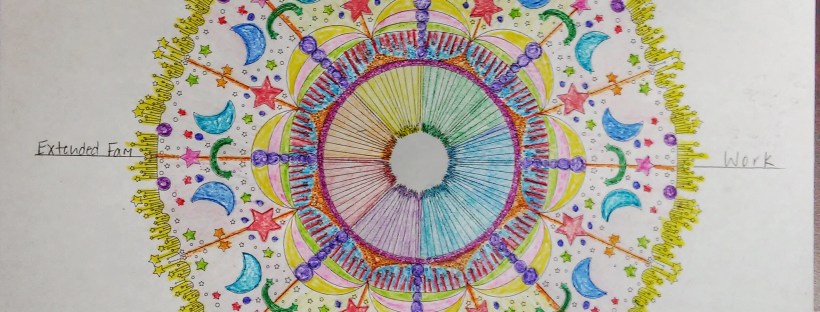
My therapist gave me a wonderful visual to explain this shift – a wheel. I’m the center of the wheel. The spokes of the wheel are the important pieces of my life. The only way a wheel can move is for the center to send energy out through the spokes.

That visual resonated with me, so I colored a mandala and created my own wheel. I labeled the spokes: Emily and Charles, Extended Family, Friends, Chris, Work, Writing. These are the people and activities where I choose to put my energy. They don’t define me. They’re not in the center with me, but they are essential parts of my wheel. The only way the wheel can spin is for me to stay in the center, pay attention to myself, “own my shit” (thanks, Myrtle) and send energy out to those spokes.

I still love to entertain. I’m great at telling stories. I’ll kick your ass at karaoke and host a dance party at the drop of a hat. These days, however, I am trying to embrace my ESFP-ness differently. I do all of those things now because they fill my cup and keep me grounded. I don’t do them because I’m avoiding hard personal work or difficult conversations. I don’t do them to get attention or to make myself feel worthy in the eyes of others. Slowly but surely, I’m learning I don’t have to be the center of any one else’s attention to feel good about myself.

I’m still a work in progress, of course. I’ll slip and fall, no doubt. But right now, I’m working hard to be the center of my own attention – the center of that wheel – so my spokes and I can get rolling.

Wide Open Spaces

The kids and I spent five days in Colorado last month. It was our first post-divorce vacation, just the three of us. My Dad hosted us at his condo in Copper Mountain, and it was beautiful.

Life is full of lessons, of course, and I learned a few out in those wide open spaces.

1. Wherever you go, that’s where you are.

Each morning, I woke up before the children and sat on the balcony with a cup of coffee, a book and my thoughts. The inside of my head had been noisy. It gets that way every once in awhile – the negative self-talk crowding out the positive affirmations. I hoped the fresh air, blue sky and majestic mountain views might turn down the volume a bit.

While my surroundings were indeed peaceful and beautiful, I realized you can’t get a fresh start simply by changing your surroundings. Your demons and doubts travel with you, no matter where you go. Granted, it’s harder to hear the inner noise above your children’s laughter and the roaring of white water, but it’s there nonetheless.

The only way to truly be healthy is to do the hard work of, well, healing. It takes concerted effort to “own your shit” and to soften your rough edges. A change of scenery – even a flight across country – won’t do it for you. Only you can do the inner work. 

2. As Patrick Swayze so eloquently put it, “Pain don’t hurt.”
The day after we arrived, we rented bikes and helmets. The kids rode them everywhere. After a few wobbly circles, I managed to get my bearings. On Wednesday, we took the bikes up the ski lift to the top, with the intent of riding back down.

My son took off on his own to explore the official mountain bike trails. My father wisely suggested that Emily and I follow him down the maintenance road, just so we could get the feel for the speed and the roughness of the ride.

Let me be clear: mountain biking is way outside my comfort zone. I really don’t enjoy going fast downhill and feeling out of control. But I promised myself that I would not spend the week sitting on the sidelines watching my children have fun. So, I hopped on the bike and started down the mountain.

My brother – an avid biker – texted me to remind me that brakes only stop the bike, not the person, so I should use them sparingly. Despite, this advice, I held on to the brakes the entire way down. I did go fast … just not super fast. I managed the curves and avoided all the rocks. When I reached the bottom, I was all smiles. I looked back up the mountain with pride. I came. I saw. I conquered!

When you decide to take up mountain biking at age 44 and you make it safely down the mountain once, you should look up at heaven, say “Thank you, Jesus,” and go find another activity. You should not go back to the bike shop, trade in your road bike for a “real” mountain bike with shocks and whatnot and head back up the ski lift.

Guess which one I did?

The second time down, we all road together. Charles stayed close to me, giving support and advice. Emily rode on ahead, stopping from time to time so we could catch up. My father brought up the rear.

I rode a little faster on the second run. I was more confident, dare I say, cocky, even. When we reached the lower half of the road, Charles bid me adieu and sped off with his sister. I kept my pace, riding the breaks ever so slightly, enjoying the wind in my hair, the sun on my face, the rock in the middle of the road ….

In retrospect, I probably could have avoided the rock with a quick swerve in either direction. But in my mind I was going too fast and a sudden swerve would have definitely caused a wreck. So, instead, I hit the rock dead on. Of course, I crashed.

I remember it vividly. I knew I was going down before I started the slide. I hit hard on my left hip, knee and elbow.  I braced with my arms to make sure my head didn’t hit the ground. I skidded to a stop a few yards away, with my bike on top of me and a ton of gravel underneath.

Once I came to a complete stop, I just lay there on my side. Some hikers witnessed the spectacle and hollered, “Are you okay?” I took a full minute to assess the situation, determined I had no broken bones, and called back, “Yep! All good!”

And I really was. Sure, I was scraped and bleeding in mutliple places, but I could stand. Once I stood, I picked up my bike. Once my bike was up, I started walking with it. And then a voice inside my head said, “Don’t you dare walk that bike down this mountain. Get back on the effing thing and ride.”

And so I did. All the way down. Smiling and laughing, acutally, because what else could I do? I showed my wounds to my kids and pedaled back to the condo to bandage them up. I even ventured back to the village on my bike later that afternoon to watch Emily bungee jump and climb the rock wall one more time.

The lesson? Take risks. Feel the wind on your face. Enjoy the ride. Expect to fall. And then GET. BACK. UP. The pain won’t last forever (although my chest still hurts when I sneeze!). And scars look cool.


3. When the rapids are the roughest, you’ve got to dig deep.

On Tuesday, we went white water rafting on the Arkansas River through Brown’s Canyon. I saw some of the most beautiful scenery I’ve ever seen. Our guide Elvis was strict about rafting safety, but laid back about everything else in life. He followed up every stroke command with a Wooderson-esque “Alright, alright!” You could tell that he was living the Colorado life: L.I.V.I.N.

We practiced our forward strokes and backwards strokes on some open river for a few miles before we hit any rapids. “Forward one!” Elvis would call. We’d all execute a forward row. “Forward two!” he’d yell, and we’d perform two strokes. “One more!” he’d say, and we’d dutifully pull one more time.

As we approached the first set of Class Two rapids, Elvis reminded us to listen carefully to his commands and to all stroke together. We sailed through with no problem, shrieking as the cold water splashed us and feeling rather victorious.

Then it was time for the Class Three rapids, with names like Bone Crusher and Raft Ripper. Elvis shifted his tone from groovy to serious, as he explained how we would navigate through the tight spaces and down the drops.

“Here we go! Go hard! Forward One! Forward Two! One more! One more! One more! Harder! Harder! Forward one! One more! One more! One more! Alright, alright.”

I’m not sure what I thought rafting was going to be like. I guess I thought we’d paddle when the river was calm and then just ride the rapids with gravity. Turns out, we did the exact opposite.

We paddled hard as soon as we hit the rapids, and we couldn’t let up until we were completely through them. When the water was the fastest and the rocks were the closest, Elvis would yell “Harder! One more!” There were times I didn’t think I could dig any deeper or go any harder. I wasn’t sure I had one more in me. But I always did. And before I knew it, we were out of the rough and back into the calm.

After one particularly rough rapid, Elvis laughed and said, “Well, we made it. That wasn’t Plan A or Plan B. Hell, I don’t even think it was Plan C, but no one went swimming, so that’s cool.”

Here’s the lesson: You can’t coast through the hardest, darkest days. When you think you don’t have anything left, you have to dig deeper and go harder. The waters soon will be calm again.


On the plane home, the kids and I talked about our favorite parts of the trip. We agreed rafting topped the list.

“I have no idea how we didn’t flip on The Toilet Bowl,” Charles mused. “I remember looking straight down at the water and just knowing we were going over. And then we spun around, bounced off that rock and headed out of the rapids. It was so amazing.”

That’s right, buddy. We didn’t flip. We should have, but we pulled hard together, and we didn’t. We still might flip one of these days, but we’ll climb back in the raft and keep going. Together. We got this.

Alright, alright, alright.

Of Casseroles and Rings: More Musings on Grace

Grace only sticks to our imperfections. Those who can’t accept their imperfections can’t accept grace either.
— Donald Miller

A family in my sister’s neighborhood was recently stricken with a double tragedy, when both the young mother and her three-year-old son were diagnosed with cancer. When (my sister) told me about this, I could only say, shocked, “Dear God, that family needs grace.” She replied firmly, “That family needs casseroles,” and then proceeded to organize the entire neighborhood into bringing that family dinner, in shifts, every single night, for an entire year. I do not know if my sister fully recognizes that this IS grace.
— Elizabeth Gilbert

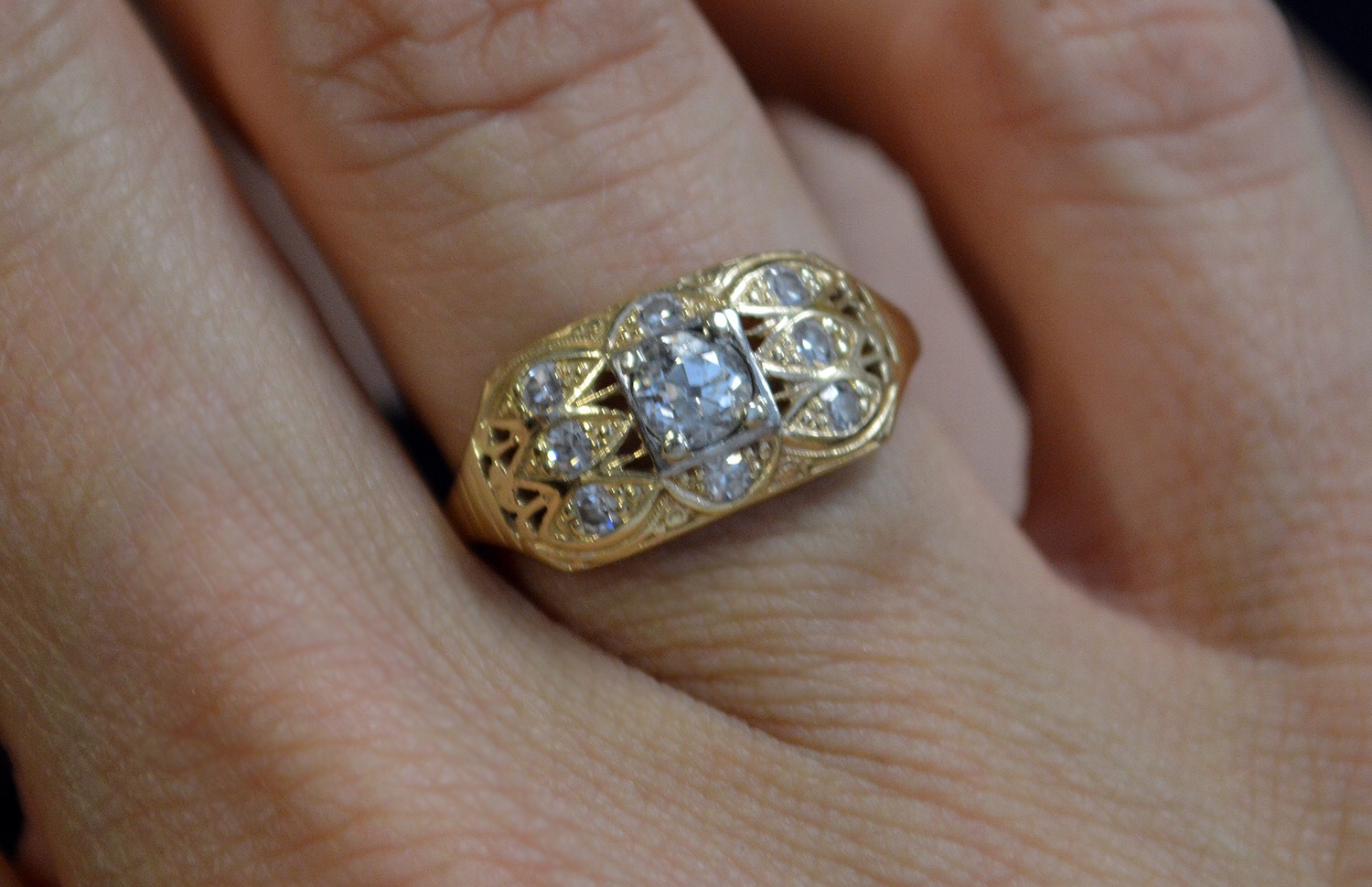
I’ve loved a certain antique diamond and gold ring for as long as I can remember. It belonged to my great-grandmother Elizabeth Tandy Trabue Goodlett. She gave it to my mother, Jean Tandy Goodlett, when she turned 16 years old.

I, Jennifer Tandy Cobb, was born in 1971. I grew up seeing the ring on my mother’s hand. It was a part of her. She was never without it. It looked large and wide on her tiny hand. I loved it.

image

Three Tandys: Liz Tandy Trabue Goodlett, Jean Tandy Goodlett Cobb, Jennifer Tandy Cobb Pyron

At some point along the way, we all began referring to it as the “Tandy Ring.” I don’t remember how old I was when I first learned it would be mine one day. “Since, you’re Jennifer Tandy, I’ll give it to you when you’re older,” my mother explained. “Maybe when you’re 40.”

Over the years, that statement morphed from “I might give it to you when you’re 40” into “I will wrap it up with a bow and it will be your 40th birthday present.” I’m fairly certain my mother never spoke those exact words, but I came to believe the ring I associated with being a grown up would be mine when I turned 40 years old.

Imagine my surprise when, two weeks before my 40th birthday, my mother asked, “What do you want me to get you this year?” I laughed, convinced she was trying to throw me off her trail. “Oh, I’m not sure! I’ll have to let you know,” I replied.

The next week, she called again. “Seriously, I need to know what you want for your birthday.” Again, I laughed. “I’m sure you’ll think of something!” I told her.

Two days before my birthday, she phoned once more. “So have you decided what you want me to get you?” she asked. This time, I was honest: “Well, what I really want is the Tandy Ring, since you’ve always said I could have it when I’m 40.”

My mother took a deep breath and said:

“Well, here’s the thing. I went to get the ring appraised and cleaned. They told me that they could size it to fit my finger and so I asked them to do that. I’ve been wearing it nonstop ever since and it’s the most beautiful thing I’ve ever owned. I love it.”

What?!?

I hung up the phone and burst into selfish, childish, stomp-my-foot-because-I-didn’t-get-what-I-wanted tears. My whole life I’d dreamed of the perfect 40th Birthday Party, with karaoke and all my friends and an open bar. I’d envisioned being the center of everyone’s attention, as I proudly showed everyone my fabulous right-hand ring.

Sheesh. I was so self-centered. Me. Me. Me. But, enough about me! What do you think of me?

Fast forward to my birthday last January. In the four years since I turned 40, I’d lost a house, moved twice, changed jobs twice and gotten a divorce. My focus had shifted from trying to be perfect to just trying to be my messy, genuine self.

My mother and I had already agreed that she would give me money for my birthday. So, when I sat down with the family for my birthday lunch, I expected no gifts. I looked around the table, soaking it all in: my children, my brother, his wife, their children, my mother and her husband. Honestly, what else did I need at that moment?

Then my mother placed a tiny gift bag in front of me. I looked up at her, confused, and opened it. Inside was a small, felt pouch. I turned it upside down, and out fell the Tandy Ring.


I burst into tears of surprise and gratitude. It was the perfect gift at the perfect time.

Because she knows all my imperfections and loves me anyway, my mother knew it was time. And she was right. I hadn’t been ready to receive it four years before. I was too focused on owning and doing the right “things.” I was caught up in being “busy,” so I wouldn’t have to face what was really going on in my life – the money troubles, the marital problems and my tendency to step back instead of lean in when things got really tough.

Over the last year, I’ve been deliberate about coming to terms with my imperfections. Or, to use slightly more casual language, I’ve tried very hard to “own my shit,” as my new idol Myrtle would say.

Like the Donald Miller quote above, I’ve come to a place where I now believe the mistakes I’ve made (and those I’m still making … and those I’ll make in the future … because I’m messy, people.) are exactly what make me able to spot and receive grace.

I’m fairly obsessed with the idea of grace. I’ve spent a lot of time looking for it in the wrong places and demanding that it show up at the right time – my time.

More often than not, though, grace comes in the form of something small and unassuming that takes you by surprise.

When that happens, you get a glimpse of understanding. Life takes unexpected twists and turns. You make mistakes. Your heart might break. But one day, when you least expect it, the good things– grace, hope, joy, love – will fall right into your hand.

What’s meant to be meant to be will always find a way.

Alone or Lonely?

I have a recurring dream that I’m back in college. The basic plot is as follows: the administration of Rhodes College realizes that they mistakenly allowed me to graduate without taking a math course. So I have to return to campus as a 44-year-old mother of two and live in a dorm room so I can take a math class in order for my degree to be legitimate.

Side note: Yes. I have a legitimate Bachelor’s of Arts in English from Rhodes College. No. I never took a college math class. Instead, they let me take three science classes. Ah, the joy of a Liberal Arts education! But, hey, I can balance my checkbook, understand a P&L statement and create a zero-based budget in an Excel spreadsheet. So, there. 

I usually spend the majority of the dream wandering around campus, confused as to why I’m back in Memphis and not in Little Rock raising my children and going to work. I can’t find the room where I’m supposed to register for the class. When I attempt to find my dorm room, the stairs do that crazy Hogwarts thing where they switch directions, so I’m never on the floor where I need to be. I arrive at a door that I think is mine, but it has someone else’s name on it. Nothing looks familiar.

I go in search of my friends. I have this sense that they are all off somewhere together. I spy them in The Rat (slang for the Rhodes cafeteria). They’ve all gathered without me. They don’t seem to realize or care I’m not there. I stand right by their table, but they don’t see me.

Over the years, I’ve interpreted this as a simple stress dream. I’ve always focused on the fact that I can think of nothing worse than being forced to take a college-level math class and being told I have to live in a dorm again. The dream is clearly about having too much to do and not being able to control what is going on around me.

At least that’s what I’ve always told myself. I mean, I’m aware I have control issues. Even when I’m supposedly relaxing, my right hand is usually in a clenched fist. When I feel out of control – at work, at home, in relationships – I clean and organize things. It’s both a procrastination method and a way to exert control over SOMETHING … ANYTHING.

I’m working on it. Promise.

Last night, I had the dream again. It was more or less the same. I tried to find my dorm room and couldn’t. I tried to register for the class, but I couldn’t find that room either.

The big difference was the heightened sense of panic I felt over not being able to find my friends. Added to that panic was a new storyline about how desperate I felt that I couldn’t get any boys to pay attention to me. (I mean, hello?! Am I back in college or middle school?!) Even the guy who I could ALWAYS count on in college to make out with me wouldn’t give me the time of day. I was invisible. I was alone. I was desperately lonely.

Somewhere in the chaos, a professor appeared at my side to encourage me. Oddly enough, the role of the calming professor was played by Stockard Channing. (I’m still binge watching The Good Wife. She plays Alicia Florrick’s meddling mother. That’s all I got.) As she tried to convince me to stay on campus and finish the class, I broke down in sobs, saying something to the effect that I couldn’t stay in a place where I was so horribly lonely.

Thank goodness, my alarm went off in the middle of that pathetic break down. Sheesh.

I lay in my empty bed in my empty house for more than 30 minutes trying to make sense of this vivid dream. I’m still not exactly sure what it means, but I think it has something to do with my struggle to understand the difference between being alone and being lonely.

My children (and my dogs) have been in Alabama with their father for two weeks, now. They won’t be home for another two weeks. For the first time ever I’ve had to learn to be truly alone in my house for an extended period of time.

It’s been wonderful. I cleaned my house the day they left, and it’s still clean. I hosted an almost impromptu BYOB/potluck for three girlfriends without worrying about little eyes and little ears. I wake up in the morning, stream Pandora on my TV, sing loudly and dance while I get ready for work. I’ve had the time and energy to invest in a new relationship. I think I’ve been to the grocery store once, maybe twice. I’ve done exactly two loads of laundry in two weeks.

It’s been scary. My house makes noises: clicks, creaks, pings and pops. The motion light outside my bedroom turns on every time a leaf blows within range. My house is extraordinarily quiet. Sometimes, I find myself wandering from room to room looking for something to clean or organize, because being alone makes me feel out of control. There’s nothing for my fist to clench on to – no kid drama, no schedule chaos, no dinners to cook, no kitchen to clean, no laundry to fold.

At my core, I’m still scared that being by myself – either temporarily or long-term – means I’m going to be lonely. I hate that desperate feeling. It makes me feel weak. It makes me feel like I have no control.

I have to remind myself that the times I’ve felt the loneliest have been when I’ve been in the company of others. When I was married, I was lonely. I’m sure he was, too. We were completely disconnected from each other because of denial, shame and blame. I purposely disconnected from friends and family because I didn’t want them to see the cracks in the armor. There were very few people who knew my marriage was ending. Now that’s lonely.

But here’s what I’m learning: being alone is absolutely not the same as being lonely. Being alone doesn’t cause loneliness. Being disconnected causes loneliness. I can do alone. I LIKE being alone. I think that bears repeating: The extrovert who draws her energy from other people LIKES to be alone. Keep your hands of my remote, people. That’s my Netflix!

I can honestly say that I’ve not had a lonely moment in two weeks, despite the many hours I’ve spent by myself. My heart tells me that’s a wonderful thing. What I have to remember to do is to reach out. To connect. To speak my truth. To not play games. To not put on armor. Geez, it’s hard to be healthy. But I’m getting there.

My Mother, My Mirror

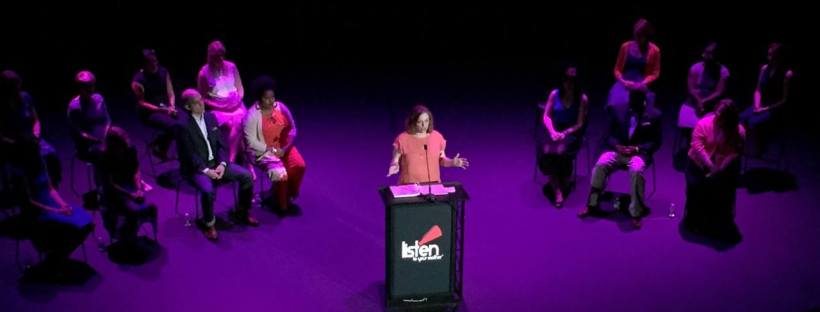
Last night, I stood on stage in front of roughly 200 people and read a very personal essay about being a daughter and a mother. It was one of the best and bravest moments of my life.

I was fortunate and humbled to be  a part of Listen to Your Mother, a national show that gives motherhood a microphone. I auditioned in February for the Little Rock show. For some reason, they liked me and let me tag along with the other cast members, who are smart, funny, tender and AH-MAY-ZING!

The cast of Listen to Your Mother Little Rock!

The cast of Listen to Your Mother Little Rock!

My biggest takeaway — other than the fact that there are some extremely talented writers in Arkansas — is that every one has a story. You have one. You may not think anyone wants to hear it. They do. I do. Find a way to tell it.

XO,

Jennifer


My Mother, My Mirror

I have so much in common with my mother. Some of it is hereditary. We talk alike. We laugh alike. We have the same smile, the same hands, the same eyes.

Some of our similarities are behavior I’ve learned by osmosis. We are both avid readers. We both love 70s folk music. We both get verklempt when we talk about a book, song, TV show or movie that moves us.

We’ve both worked hard to build our professional reputations. We’ve both remained committed to our faith, even though at times it’s been seriously tested. And, most importantly, we rarely leave the house without lipstick.

Over the last 18 months, I watched my mother fall in love. It was wonderful, weird and awful … all at the same time.

Wonderful because she is so happy. I haven’t seen her this happy since I was a child. She deserves it.

Weird because, well, it’s my MOTHER. And she’s in LOVE. With a BOY. And she’s GIDDY. And she wants to talk about MUSHY STUFF. The roles are completely reversed and it’s disorienting.

Awful because just as she was falling in love and planning a wedding, I was grappling with the fact that my marriage was falling apart.

My mother and father divorced when I was a sophomore in high school. It was hard watching her grow small. She tried to display grace under pressure and put on a brave face. She put me and my brother first and was right by my side through high school, grad school, first job, second job, third job, marriage, moves, more jobs, and children.

Then about a few years ago, I started noticing something was lighter about her. She looked at me one day and said, “I think I’m finally out of my fog. It took me almost 20 years, but it’s clearing.”

I helped her set up some online dating profiles. We set those filters so tight that only Mr. Right himself was going to slip through. And in the summer of 2013 he did. He proposed later that fall. She made him sweat it out for many months before she accepted. They set a date for the end of June 2014.

As my mother emerged from her self-proclaimed fog, I retreated into my own.

By the time mom and her beau made their engagement official, my husband and I were desperately clinging to the hope we’d make it. I think we both knew we wouldn’t. Anger, shame, blame and hurt had worn both of us down to nubs. Our exposed nerves jangled and caused tension in the house like you wouldn’t believe.  We were snappish with each other and with the children. It was my turn to grow small.

For the first time in my life, I didn’t feel like I could talk to my mother. I did not want to be the black cloud raining on her parade. I smiled while she talked about wedding plans, while inside I ached and worried. I dutifully accompanied her to register for gifts, choose food for the reception and pick out a dress. Those are wonderful memories, to be sure, but it’s as if I slept walked through the process.

As she and her fiancé consolidated households, I eyed the furniture they were selling and giving away. “You need to tell them to store it,” my husband said. “You know, in case we separate.”

“He means when,” I thought “For when we separate.” But I couldn’t say it out loud yet. Especially not to my mother, who was over-the-moon happy.

The wedding week arrived – and it was full of laughter and joy. Mom was gorgeous. She smiled  non-stop for three days straight. I don’t think James let go of her hand once. They were surrounded by family and friends, celebrating their love and commitment and future.

I was determined to be a picture-perfect matron of honor/daughter of the bride, so I smiled, laughed, hugged, joked and served as best I could. I managed to keep my mask intact for almost the whole ceremony. But as I stood at the lectern to deliver my reading, I made the mistake of looking out into the congregation. I saw my husband sitting with a strained smile on his face. I saw my sweet children sitting next to him, oblivious to the pain he and I were in. And then, I caught my mother’s eyes.

My mother. My support. My compass. My heart. My mirror.

My voiced cracked. My eyes filled with tears. I paused and choked them back. I shook my head a bit. I smiled. I carried on.

Months later, when I told her that my husband and I were indeed separating, she listened to my whole story – every last mistake, blemish and failure. She hugged me and said, “You’ve done so much for me over the years while I’ve been by myself. You’ve rescued me so many times. Now I’m going to rescue you right back.”

And she has.

These days, I can feel my own fog lifting a bit around the edges, slowly but surely. My smiles are more sincere. My laughter more genuine.

I look at my mother – so happy, so giddy, so mushy, so in LOVE – and I’m grateful. Grateful to have so much in common with her. Grateful that she’s walked this path of single motherhood before me. Grateful in knowing that I may once again walk the path she’s on now.

 .

New Normal

The alarm goes off at the usual time. Time to make the donuts, she thinks. She chuckles, remembering that’s how they used to start every morning, with one of them quoting the old commercial from the 70s.

In the bathroom, she stares intently in the mirror, leaning close to examine her eyes. Red again. She thinks back on the previous night. Too much wine? Nope. Tears? No, thankfully. She’s past that stage, for the most part. Although this morning, she does feel a bit more fragile than usual, like there’s something simmering beneath the surface. She chalks up the bleary eyes to allergies and pops a Claritin.

In the kitchen, she brews a single cup of coffee in the Keurig she requested for Christmas. It proved difficult to make a single cup in the 8 – 10 cup Mr. Coffee machine. She grew tired of dumping out the leftovers every day once the morning caffeine consumption was cut in half.

She makes breakfast. Wakes the kids. Gathers uniforms. Dries her hair and puts on makeup, jockeying for a spot in the bathroom mirror. Her daughter insists on sharing the master bathroom with her these days, leaving the other bathroom to her 14-year-old son. The boy’s bathroom and the girls’ bathroom, her daughter quips.

Carpool. She knows she should engage the kids in conversation, but she’s just so tired. The kids seem tired, too. They ride in silence, content to have a few more minutes of solitude.

Traffic. Parking. Another cup of coffee at the office. Chit chat with coworkers before sitting down to check the day’s schedule.

She has a meeting at 10 a.m. with a jeweler. She’s decided it’s time for her to sell her rings. She’d asked his permission first, since the large one with the diamond had belonged to his mother – a gift from his father on the day she gave birth in 1969. He told her to go ahead and sell it.

She sits quietly at her desk for a moment, trying to identify the ache that’s starting to spread in her chest. She used to numb moments like these, staying busy in order to avoid feeling whatever she was feeling. Filling up her hours with work, volunteering, appointments, chores just so she wouldn’t have to face the sadness, worry, anxiety, fear.

These days though, she white-knuckles through the discomfort, asking herself questions until she gets at the root of the matter. Is she worried about the kids? Is it something at work? Is it money? Does she miss being married? Does she miss him? Is she just overwhelmed? Today, it’s none of those. Or maybe it’s all of those. She can’t figure it out.

Bad news, the jeweler says later that morning. It’s a nice size diamond but the color and clarity aren’t all that great. I’m afraid I can’t give you much for it after all. She figured. The rings are lovely and unique, but more sentimental than anything else. She thanks him and heads home for lunch.

She attends a meeting, her first with this group. She’s welcomed with open arms and hugs by the women there. She tries to stay focused, to listen and learn. Keep it simple! someone says. She has to laugh. Simple? Where on earth does that fit in to my life? she wonders. Nothing’s simple when you’re a single working mother of two teenagers.

She stops by another jewelry store on her way back to work. Again, she’s offered far less than she feels she should take for the symbol of the last 17 years of her life.

She can feel the ache spreading, rising in her throat. She calls her brother, who answers laughing about something unrelated. I’m not doing well, today, she says. There’s absolutely no reason for me to feel this way. Nothing’s different from yesterday. Nothing’s changed. 

The tears are coming. She chokes them back.

He listens to her. He says things like some days are just harder… take it one day at a time… you’re doing fine. He tells her a story that makes her laugh hysterically. The ache starts to fade.

More laughter with coworkers. Crossing things off the to-do list. It feels good to be productive. She texts back and forth with a friend, smiling at the utter silliness of the thread.

After work, she goes to the bank to sign paperwork for a loan extension. Only three more payments to go, her banker says cheerily. And you don’t have to make a payment this month. The tightness in her chest loosens a little more.

She gets a great report from her daughter’s voice coach and an unsolicited hug from the usually cranky preteen. Back home, she turns on Pandora and dances in the kitchen while she cooks. The fragile feeling is almost gone by the time her son walks through the door from baseball practice, saying Hey Mama! How was your day? in his deep voice.

Laundry. Dishwasher. Tidying up. She tucks her daughter into bed with a hug and kiss. She walks through the house, turning off lights, double checking the locks on the doors. She stops at her son’s room. Don’t say up too late, she says, kissing him on the top of his head.

She gets into bed, arranging all the pillows how she likes them simply because she can. The dog jumps up and settles into his spot at her feet. Her son comes in and flops on the bed next to her. She strokes his hair, marveling at how big he is now, feeling lucky that he still comes in every night to say ‘night Mama before heading off to his own bed.

She thinks back on the day, remembering how fragile she felt this morning, how she scoffed at the word simple, how she almost cried, how the laughter, the hugs, the smiles, the dancing in the kitchen brought her back to life.

I was vulnerable today, she thinks, but I’m grateful. I’m grateful for my family, for my job, for the roof over our heads, for the food in the fridge, for the gas in the car, for the dog at my feet.  

She turns out the light. One long breath in for four beats. Hold it for seven. Let it out for six. She sleeps.


Ghosts and Grace

“They are only a ghost if someone alive is still holding on to them.” –The Secret Garden

“The church and people can break your heart. God never will.” — Rev. Carey Stone

I really should have seen it coming. I’d been a getting little too big for my britches. On more than one occasion, when a concerned friend asked me how I was doing, I had smiled broadly and replied emphatically, “I’m great! I really am. I’m doing great.”

I wasn’t lying. I have felt more confident, more secure, genuinely happier over the last few months. But looking back, something was off last week. I was super busy at work. We had activities after school every night. There were no margins in my days. I just felt … meh.

I couldn’t put my finger on it, but I didn’t have time to be still and listen. Instead, I put on my armor of busyness piece by piece, activity by activity, office hour by office hour. So, I really shouldn’t have been surprised when the armor cracked Sunday morning.

A few weeks ago, my dear friend asked if I would come to church with her to celebrate her installation as youth ministries leader. Sounds like an easy thing to do, right? Here’s the catch: four years ago, this church, and many of the people in it, broke my heart.

It had been my church home when we moved back to town. We chose it because it was attached to the parochial school where I attended K – 8 and where we enrolled both kids. I dove head first into volunteering, both for the church and for the school. Soon, my entire life and all my heart revolved around those few city blocks in downtown Little Rock.

All that came to a screeching halt when the Vestry and the Dean voted to close the school with two weeks left before graduation. I’ll spare you the ugly details. If you need the back story, you can read more here.

Needless to say, my heart was shattered. My faith took a beating, too. I carried around a mental list of all the people who’d been present at that closed-door meeting. I held grudges for every snide comment, every harsh word and every cold shoulder. I played the blame game … a lot.

Man, that was a heavy, heavy burden. Over the years, I laid it down bit by bit. I thought I’d made my peace entirely.

And yet.

Sunday morning marked the first time I’d attended a service there since the last school graduation in May 2011. Here’s what I had hoped would happen: I’d walk in the back of the church; inhale the familiar smell of furniture polish, candle wax and mustiness; see the gorgeous stained glass windows whose designs I’d memorized as a child; hear the organ music and the tower bells and my heart would soar.

That didn’t happen.

As I walked up the steps, I was tense. I tried to breathe deeply and relax. I entered the church and saw a woman I’ve known since I was in junior high. We chatted. She hugged me. Then another old friend was at my side … and another. So far, so good.

Just after the first hymn began, I started seeing the ghosts.

In place of the boy carrying the cross, I saw my son on the night he served as Crucifer in the Christmas pageant. I looked over at the hand bell table and saw figures of children — remnants of the school’s hand bell choir. I saw my daughter and her classmates flying down the center aisle in angel costumes. I heard my children’s voices — and mine own as a child — emanating from the choir stalls. I pictured the sanctuary with the dimmed lights on the eve of my own 8th grade graduation. Instead of listening to every word of the sermon, all I could see was my dear friend the school chaplain standing in the pulpit during that final graduation, imploring us to “stay on the vine.”

Although I was distracted, I wasn’t yet overcome. However, one of the chosen hymns during the service was “I Want to Walk as A Child of the Light.”  On a good day, at my own church, with no ghosts swirling around me, I have a hard time hearing that hymn. It was the traditional closing hymn at every Cathedral School graduation. As the proud parents, teachers and student body sang, all the recent graduates walked down the aisle carrying candles, symbolically sharing their light with the rest of the world as they moved on to new schools.

On this Sunday, the moment the organ started playing the familiar tune, my tears started flowing. I fled for the back door, running from the ghosts lurking in every corner. There, on the steps of the church, I broke down into heaving sobs. I was shocked. I didn’t know there was that much grief and sadness still left in me.

I thought I was “Great! Really great!” Apparently not.

After church, I went for a long walk to shake the ghosts. I thought about my friends who’d stayed at the church after the school closed. Their hearts were broken, too. Yet, they’d stuck it out. They hadn’t run away. They’d grieved at the appropriate time, so the memories didn’t turn into ghosts.

Slowly, it began to dawn on me: I was surrounded by ghosts in that sacred space for the simple reason that I was still holding on to them. When the school closed, I hadn’t given myself time or permission to confront my pain. I’d done what I had always done when things got really hard: I numbed. I got busy finding new schools for the kids. I got busy scheduling summer activities. I got busy at work. Anything I could do to stay in motion so I wouldn’t have to be still and know the pain.

Suddenly, I realized what had been tugging at me all week. It was that voice in my head that I’ve been trying so hard to listening to these days. The voice that says, “Slow down. Look around. Be present. Be grateful. Acknowledge your imperfections. Lean in. Let it hurt. Be you.”

Last week, I drifted. Instead of living intentionally, I’d allowed the hustle and bustle of life to overwhelm me. It took a big cosmic “ha!” in the form of a simple hymn to bring me back. It was as if God said, “Oh no you don’t! You’ve still got work to do, missy. Here. Let me show you.” 

I don’t believe in coincidences. I believe in moments of grace. There was a reason I chose to witness my friend’s installation into a new church position on the exact same day that hymn was chosen. I needed to hear it. My heart needed to break wide open again, just for a moment, so I could face the pain head on this time. That, my friends, is my idea of grace.

During my walk, I processed a lot of grief. I’m sure there’s still more there. Only time — and more trips to that church — will tell.

By the time I returned home, I had a smile on my face and grace in my heart. There was no darkness, only light. The ghosts were gone. And these were the words I was singing in my head:

I want to walk as a child of the light
I want to follow Jesus …
In Him there is no darkness at all
The night and the day are both alike
The Lamb is the light of the city of God
Shine in my heart Lord Jesus

Peace be with you.

Taken at the final Cathedral School graduation in May 2011 by fellow classmate Nelson Chenault.

Taken at the final Cathedral School graduation in May 2011 by fellow classmate Nelson Chenault.


My Hometown (with thanks and apologies to The Boss)

I was eight years old and running with a dime in my hand
To the bus stop to pick up a paper for my old man
I’d sit on his lap in that big old Buick and steer as we drove through town
He’d tousle my hair and say son take a good look around … this is your hometown

I was born and raised in Little Rock. So was my Dad. I’ve always been proud to be a generational Little Rocker. My upbringing in my beloved hometown knit the fabric of the person I was, the person I lost sight of there for a while and the person I’m becoming again.

My early childhood was pretty idyllic. Our house was on a block full of children. We played Freeze Tag, Swing the Statue, Kick the Can and Piggy Wants a Motion (pretty sure we made that one up) late into the night during the summers.

I was on a first name basis with the pharmacist at the drugstore. He sold me ice cream and put it on my mother’s tab. My best friend and I met every Saturday and walked to Browning’s Mexican Restaurant for chips and dip. Then we squandered our allowance on video games at The Yellow Rocket. We saw movies at The Heights Theater and trespassed at St. John’s Seminary.

I learned politics and religion from my parents. My mother was the creator and sponsor of the Accept No Boundaries student organization at iconic Little Rock Central High. Her students wore t-shirts with a photo of a black child and white child hugging and a caption that read, “Nobody’s Born a Bigot.”

Growing up in the Episcopal Church, I had no idea there were denominations not accepting of anyone and everyone. I grew up under influence of strong female church leadership, including Mother Peggy, one of the first women ordained in the Episcopal Church. I remember attending an event with my mother where we walked from Christ the King Catholic Church on Rodney Parham to Temple B’Nai Israel to recognize the journey many Jews took during the Holocaust.

My children were born in Montgomery, Ala. My husband and I relocated there in 1997 for his job. I was pregnant with our son when his company closed. We entertained the idea of leaving at that point, but I had a great job. We had good friends. I loved my church. So we stayed.

Every time I’d visit Little Rock with my children, my heart would hurt. I’d spend the days driving the streets of my hometown, fondly recalling growing up in a small Southern town with lots of charm. I’d eat at all the delicious locally owned restaurants. I’d take long walks through the neighborhood, looking at houses and making up stories in my head about living in Little Rock again.

One summer, I sat at the pool with one of my best friends from high school. Our children frolicked in the kiddie pool. Coincidentally, it was the pool where my parents had been members when I was growing up. I learned to swim there. I had birthday parties there. I charged food at the snack bar there. I ogled the older boys. Again … idyllic.

As I sat there, completely content, I had what I have come to refer to as a full-on epiphany. A voice inside me said, “This is where I have to raise my children.” I’ve never believed anything so strongly. Within months, we sold our house, I found a job in Little Rock and we enrolled the kids in school and daycare.

I was home.

Words were passed in a shotgun blast
Troubled times had come to my hometown

There was a bit of a kerfuffle in Arkansas recently. You’ve seen the headlines, I’m sure. We now have a Religious Freedom Reformation Act on the books. It mirrors the Federal law, but many are still concerned – and rightly so — that it opens the door for discrimination against lesbian, gay, bisexual and transgender individuals.

Republican Governor Asa Hutchinson is considering signing an executive order creating a protective class for LGBT individuals. I truly hope he does, because regardless of the RFRA’s stated intent, there are too many people in the state who will use it to discriminate against anyone they perceive as different.

It breaks my heart that the same state where I learned to be tolerant, loving and accepting is now once again garnering national headlines for its open hatred of those considered “other.” The same state where I steadfastly believed I needed to raise my children is fast becoming the last place I want them living when they grow up.

I told a friend that I am so angry I want to throw things. I don’t know at whom said things will be thrown, but sometimes nothing gets the mad out like pitching a fit and throwing things.

Now Main Street’s whitewashed windows and vacant stores
Seems like there ain’t nobody wants to come down here no more

And that’s another thing. When I made the argument for moving home to Little Rock, I told people that I wanted to live in a city my children could make their home after college. I dreamed of them and their spouses finding lucrative jobs and raising my grandchildren right around the corner from me.

But if Arkansas continues on this trajectory – and sadly I think we’re headed for many more years of crazy before it all dies down – there will be no lucrative jobs to be had. I am firmly convinced that no 21st-century companies will choose to set up shop in a state now known as one of the most anti-gay states in the nation. Plus, the businesses that are here now are going to have a hard time recruiting bright, talented, hard-working individuals to move here to work for them. I will have a hard time encouraging my children to stay.

Would the last forward-thinking, open-minded, whole-hearted individual to leave Arkansas please turn off the lights? Oh wait, never mind. We’re already living in the dark.

Last night me and Kate we laid in bed
Talking about getting out
Packing up our bags maybe heading south
I’m thirty-five, we got a boy of our own now
Last night I sat him up behind the wheel and said son take a good look around …
This is your hometown.

I asked my children a year or so ago, “Do you feel like this is your hometown even though you weren’t born here?” My son said, “Oh yeah. I don’t even remember Montgomery. This is where my friends are.  This is home.”

The other night, Emily and I were in the car driving east on Cantrell Road. We had just left my dad’s house and were heading to school to pick up Charles after his baseball game.  It was one of those spring nights where it’s just warm enough to roll the windows down.

As we cruised down Cantrell Hill from the Heights to Riverdale, I caught a glimpse of downtown and the Capitol. I looked over at my daughter, happy and content. I thought about how many times I’ve driven down that hill … first as a passenger with my parents, then behind the wheel as a teenager, now with my own kids.

Suddenly I heard that voice again, the same one I’d heard at the pool more than a decade ago: “This is where I have to raise my children.”

It’s not time to leave. There’s still too much good here and too much to be done to make this state better.

I smiled at Emily and turned the radio up. The wind whipped through our hair. We sang loudly to Taylor Swift, as we drove the streets of our hometown.